_
Changing work practices is difficult
It's hard to change internal team practices without a strong initial push. You need enthusiasm, everyone's participation and commitment, and a clear shared start.
Processes and guidelines are missing
There are no clear guidelines on who can use which AI tools, when, and with what budget. Systematic AI adoption processes are missing. We need a framework for how to operate.
Preconceptions and outdated experiences
"AI produces poor code", "doesn't work with legacy systems", "only suitable for small projects" – beliefs are based on outdated experiences, inadequate configurations, insufficient specs, or not enough time to experiment.
Hard to keep up with development
New tools and improvements come weekly. Developers don't have time to research and test new solutions amidst sprints and backlog. Without a systematic and efficient way to follow industry developments and test new tools, it's difficult to stay competitive.
Training doesn't match real work
We've experienced this ourselves. In one AI training, developers practiced with a small Python demo application, even though their actual tasks involved a large Java monolith. The training went well, but developers didn't find it useful in their own context. AI adoption doesn't fail due to developer resistance, but because the change is introduced to the organization without adequately considering their real work, architecture, and workflows.
_
We are software developers ourselves and early adopters of AI tools.
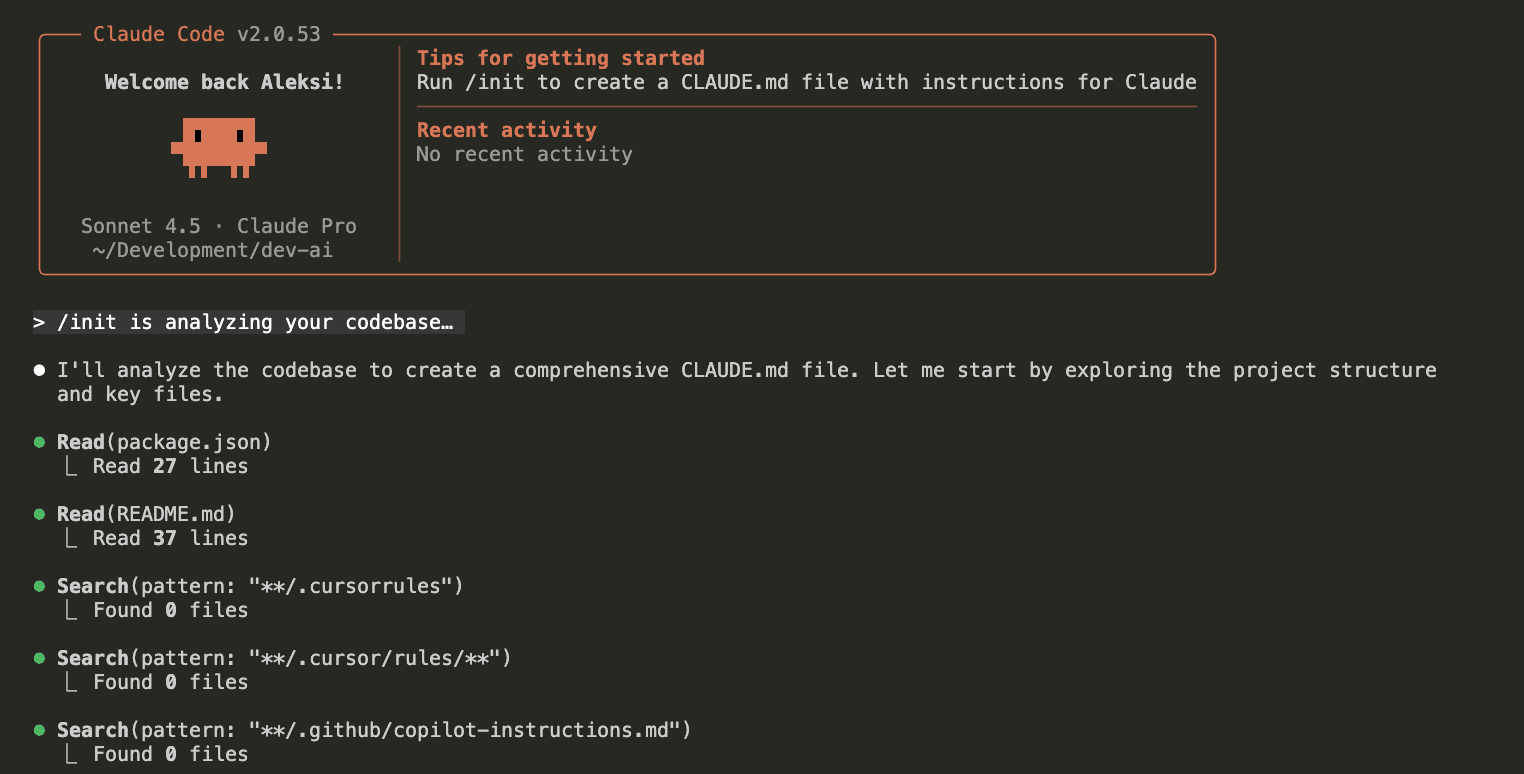
We've tested early versions of Cursor, Claude Code, Aider, and other modern AI development tools back when most organizations hadn't even considered an AI strategy. This way we've closely followed the rapid acceleration of development and AI's impact on software development.
We've guided AI adoption in our own work communities, helping developers transition from generating individual functions with Copilot toward modern AI-assisted work that covers comprehensive feature planning, building, and automating repetitive tasks.
This experience has taught us an important lesson:
The best AI software development practices don't emerge from top-down mandates. They emerge within the team through daily development work — in real systems, facing real problems.
That's why we don't operate like a traditional consulting firm. We don't choose tools or processes for you, but focus on finding the best solutions for you together.
Instead, we work from the inside out:
- We assess together with your developers which tools and practices best suit your specific context.
- We help create processes that organically accelerate AI adoption
- We bring AI into your daily work so you can leverage it comprehensively from planning and requirements definition to building and testing.
The result is lasting change in work practices and efficiency.
🛠️_
AI adoption only succeeds in practice, by doing real work in real environments. That's why our program is built to be concrete and team-centered.
Deep Dive
Launch phase where we work with the core team:
- •We familiarize ourselves with the codebase and processes
- •We implement selected AI tools (Cursor, Claude, Copilot, or others)
- •We help build working configurations
- •We help identify and resolve technical and process bottlenecks in AI development
Kickstart Day
Whole team involved — in person or remote:
- •We go through the basics of modern AI development
- •We test tools and recipes in real work
- •We share findings and ensure everyone gets started right away
- •The day's goal: enthusiasm, knowledge, and clear direction
Follow-ups
So AI doesn't remain just workshop enthusiasm:
- •Q&A sessions and sparring
- •Solving practical problems
- •Current updates to tools and processes
- •Summary of AI adoption progress
Recipe Book
The team gets their own "AI development recipe book" containing:
- •Best practices and workflows
- •Configuration
- •Prompting
- •Templates
- •Example commands and instructions for AI-assisted tasks